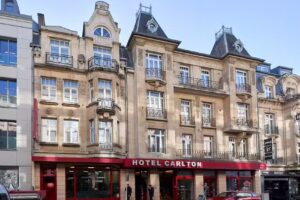
A unique coliving experience in Kirchberg by Many Many
BackLocated on Rue de Neudorf, on the edge of Luxembourg's popular Kirchberg business district, lies an accommodation option that deliberately departs from the traditional hotel model. "A unique coliving experience in Kirchberg by Many Many" is not just a name, but a statement of intent. It represents a coliving concept, a shared living arrangement that is gaining popularity, particularly among young professionals and expatriates flocking to the Grand Duchy. This hybrid model, somewhere between private rental and a communal hostel , deserves careful consideration for any newcomer or worker looking to settle in.
The concept: More than just a room
Many Many's core principle is to provide much more than just walls and a roof. The offering is designed as a turnkey solution, aiming to eliminate the administrative and logistical hassles often associated with settling in a new country. The monthly rent is all-inclusive, covering electricity, water, heating, home insurance, and a high-speed internet connection. Furthermore, a weekly cleaning service for common areas is included, ensuring a certain standard of cleanliness and hygiene. This all-in-one package represents a significant advantage, allowing residents to focus on their work and social integration without worrying about managing bills and multiple contracts.
The experience offered is designed to be community-oriented. Many Many makes it a point of honor to create a social environment by regularly organizing events for residents. The goal is to transform a group of strangers into a close-knit community, thus facilitating encounters and networking—a valuable asset for anyone starting a new life in Luxembourg. Unlike the isolation one might feel in vacation apartments or individual studios, coliving fosters daily interactions in shared and well-designed living spaces.
Living spaces: Between intimacy and conviviality
The Neudorf residence, one of the houses managed by Many Many, is an architectural structure designed for this balance. It comprises 12 private dwellings , fully furnished with a modern and functional design. Each room is designed to be a personal haven, equipped with a workspace and storage. The style is contemporary and minimalist, clearly aimed at a young and active clientele. These private spaces are complemented by spacious common areas. The house features two fully equipped kitchens, five bathrooms, a living room, a dining room, and a laundry room. One of the major assets of this particular property is its large garden, offering an outdoor space for relaxation or barbecues—a welcome luxury in an urban setting. The carefully curated decor of the common areas aims to create a welcoming atmosphere, far removed from the sometimes impersonal image of a simple posada or hostería .
Advantages and disadvantages: An objective analysis
Every type of accommodation has its strengths and weaknesses. It is essential for potential clients to weigh the pros and cons before committing.
The highlights
- Ease of setup: The main argument is convenience. Arriving with just your suitcase and finding a fully functional, connected, and managed living space is an undeniable advantage. It radically simplifies the expatriation process.
- The integrated community: For newcomers, the opportunity to easily meet people with similar experiences provides important social and moral support. Organized events act as a catalyst for these connections.
- Strategic location: Proximity to the Kirchberg plateau, home to numerous banks, European institutions, and major companies like Amazon, is a major advantage for professionals working there. Commuting times are reduced, which improves quality of life.
- Flexibility: Rental contracts are generally more flexible than traditional Luxembourg leases, with shorter notice periods, which is ideal for medium-term stays or for those whose professional situation is in transition.
Points to consider
- The cost: Convenience comes at a price. Many Many's rates, while all-inclusive, are at the high end of the Luxembourg rental market, which is already one of the most expensive in Europe. For a similar budget, it's sometimes possible to rent a small studio apartment, although without the services and communal atmosphere. Therefore, it's essential to assess whether the service package justifies the investment.
- Communal living: While an advantage for some, it can be a disadvantage for others. Sharing kitchens and sometimes bathrooms requires compromise. Noise and the different lifestyles of housemates can be sources of friction. This isn't a resort where service is omnipresent and privacy is absolute. The experience depends heavily on the dynamics of the resident group.
- Room size: The photos and descriptions suggest that the rooms, while well laid out, are modestly sized. For those who need a lot of personal space, this could be a limiting factor.
- The exact location: Rue de Neudorf is a major thoroughfare. Depending on the room's position in the house, traffic noise could be a nuisance. It is advisable to inquire about soundproofing and, if possible, visit the property to assess the noise level.
Who is this type of accommodation intended for?
Many Many's coliving service is clearly geared towards a specific audience. It's ideal for young professionals, international interns, consultants on assignment, or expatriates newly arrived in Luxembourg. These individuals fully benefit from the turnkey solution and the opportunity to quickly build a social network. It's neither a family-run department nor a peaceful retreat comparable to isolated villas or cabins .
On the other hand, those seeking absolute tranquility, couples desiring complete privacy, or families will find this format less suitable. Similarly, those with in-depth knowledge of the local real estate market and willing to handle the administrative procedures themselves might find more economical, albeit less immediate, options. Ultimately, Many Many positions itself not simply as a housing provider, but as a facilitator of integration into a dynamic and demanding urban environment. The decision to choose this type of accommodation will therefore depend on individual priorities: convenience and community on the one hand, and cost and complete independence on the other.